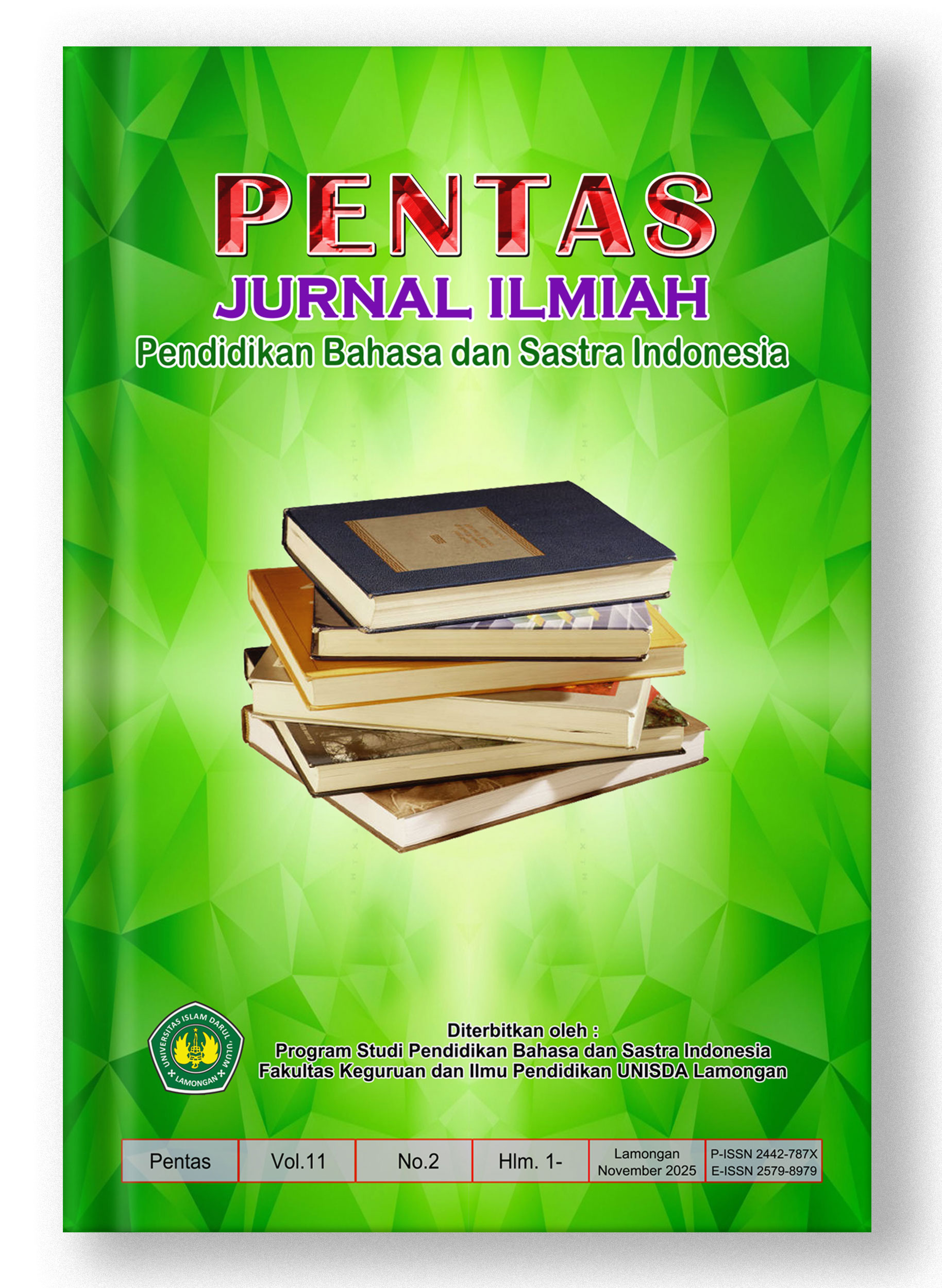
ANALISIS RETORIKA FERRY IRWANDI DALAM VIDEO YOUTUBE: “HOW TO BE A GOOD STORYTELLER”
DOI:
https://doi.org/10.52166/pentas.v11i2.10282Keywords:
Rhetoric, Aristotle's theory, storytellingAbstract
The development of digital media has changed the pattern of public communication, including in delivering persuasive messages. This study aims to analyze the rhetorical strategies used by Ferry Irwandi in a YouTube video entitled How To Be a Good Storyteller. This study uses a qualitative descriptive method through observation and content analysis techniques. The focus of the study refers to three elements of classical rhetoric: speaker credibility (ethos), emotional appeal (pathos), and logical reasoning (logos). The results of the study show that Ferry Irwandi consistently integrates these three elements in delivering his narrative. He builds ethos through personal experience, activates pathos with a relaxed and familiar language style, and composes logos sequentially and systematically. This study concludes that classical rhetorical strategies remain relevant and effective in increasing the persuasive power of communication in the digital era.
Downloads
References
Aisyah, M. (2022). Ethos, pathos, logos dan komunikasi publik: a systematic literature review. Jurnal Darma Agung, 30(3), 442-469.
Al Hafidz, N. F.,dkk. (2023). Analisis Retorika Najwa Shihab Dalam Program Mata Najwa Episode" Cipta Kerja: Mana Fakta Mana Dusta". Innovative: Journal Of Social Science Research, 3(6), 10349-10363.
Dhia, R. N., Pramesthi, J. A., & Irwansyah, I. (2021). Analisis Retorika Aristoteles pada Kajian Ilmiah Media Sosial dalam Mempersuasi Publik. Linimasa: Jurnal Ilmu Komunikasi, 4(1), 81-103.
Gereda, A. (2020). Keterampilan Berbahasa Indonesia: menggunakan bahasa Indonesia secara baik dan benar. Edu Publisher.
Ibrahim, M. B., dkk. (2023). Metode penelitian berbagai bidang keilmuan (Panduan & referensi). PT. Sonpedia Publishing Indonesia.
Irawandi, F. (2021 Agustus 09). How To Be A Good Storyteler: Bedah storytelling subscribers [Video YouTube]. Diakes melalui https://youtu.be/vWAsGVdRTv0?si=dnQlFtXvE4WZTgOt
Isa, A. T. H. (2022). Analisis Bukti Retorika Pidato Nadiem Makarim pada Hari Guru Nasional 2019. Jurnal Lensa Mutiara Komunikasi, 6(1), 127-138.
Natanael, E., & Haryono, C. G. (2019). Konstruksi Gaya Retorika Fredrich Yunadi (Analisis Retorika Aristoteles Program Televisi Catatan Najwa Edisi “Setia Pengacara Setya”). SEMIOTIKA: Jurnal Komunikasi, 12(2).
Putri, Y., Ernanda, E., & Putra, Y. M. (2023). Retorika dalam Pidato Anies Baswedan di Youtube Tahun 2017-2022. Kajian Linguistik Dan Sastra, 2(2), 161–171. h ttps://doi.org/10.22437/kalistra.v2i2.23273
Saputra, R. A. V. W., Kom, S. I., & Kom, M. I. (2024). Retorika: Teori dan Teknik Praktis Seni Berbicara di Era Digital. wawasan Ilmu.
Steviasari, P. chika. (2020). Retorika Dakwah Ustadz Abdul Somad (Analisis Wacana Terhadap Youtube Ustadz Abdul Somad). UIN Raden Intan Lampung, 60. http://repository.radenintan.ac.id/11201/1/SKRIPSI 2.pdf
Witara, K., dkk. (2023). Metodologi penelitian bidang pendidikan: Panduan praktis. PT. Green Pustaka Indonesia.
Wulan, E. P. S., dkk. (2024). Retorika dan Dialektika Komunikasi Publik. CV. Gita Lentera.
Zuhry, A. A. (2025). Retorika Aristoteles Pendeta Steve Marcel dalam Konten Youtube Deddy Corbuzier. 24, 86–96.
Zulkarnaini, S. (2024). TEKNIK RETORIKA DALAM PENGGUNAAN PATHOS, LOGOS, ETHOS DALAM VIDEO PIDATO JOKO WIDODO DI YOUTUBE. JBI:Jurnal Bahasa Indonesia, 2(2), 74-81.
Downloads
Published
How to Cite
Issue
Section
License
Authors who publish with PENTAS agree to the following terms:
Authors retain copyright and grant the Engagement right of first publication with the work simultaneously licensed under a Creative Commons Attribution License (CC BY-SA 4.0) that allows others to share (copy and redistribute the material in any medium or format) and adapt (remix, transform, and build upon the material) the work for any purpose, even commercially with an acknowledgement of the work's authorship and initial publication in PENTAS .
Authors are able to enter into separate, additional contractual arrangements for the non-exclusive distribution of the journal's published version of the work (e.g., post it to an institutional repository or publish it in a book), with an acknowledgement of its initial publication in PENTAS .
Authors are permitted and encouraged to post their work online (e.g., in institutional repositories or on their website) prior to and during the submission process, as it can lead to productive exchanges, as well as earlier and greater citation of published work (See The Effect of Open Access).

This work is licensed under a Creative Commons Attribution-ShareAlike 4.0 International License.